"QPQ" is an abbreviation for "Quench-Polish-Quench" originally meaning quenching-polishing-quenching. In China, it's called QPQ salt bath composite treatment technology. "Salt bath composite" refers to treating workpieces in both nitriding and oxidation salt baths. QPQ technology can prevent workpiece deformation while significantly improving the wear resistance and corrosion resistance of metal surfaces, making it a new metal surface strengthening and modification technology. This technology combines nitriding and oxidation processes, nitrides and oxides, wear resistance and corrosion resistance, and heat treatment and corrosion prevention technologies.
I. Basic Process of QPQ Technology
1. Workpiece Cleaning – Water Rinse – Preheating – Salt Bath Nitriding – Salt Bath Oxidation – Cold Water Cooling – Hot Water Immersion – Water Rinse – Drying – Polishing – Secondary Oxidation – Polishing – Packaging.
II. Performance of QPQ Treatment Coating
1. Extremely High Wear Resistance: Rigorous sliding wear tests conducted in the laboratory show that after QPQ treatment, the wear resistance of 40Cr steel can reach 30 times that of conventional quenching, 14 times that of carburized and quenched low-carbon steel, 2.8 times that of ion nitriding, and 2.1 times that of hard chrome plating.
2. Excellent Corrosion Resistance: In a humid environment, after outdoor rain-protected placement tests, the corrosion resistance of 45 (S45C) steel after QPQ treatment can reach 16 times that of hard chrome plating, 26 times that of 1Cr13 stainless steel, and 4.5 times that of 1Cr18Ni9Ti stainless steel.
3. Good Fatigue Resistance: QPQ treatment can increase the fatigue strength of steel and iron materials by 20-200%. The extent of the increase in fatigue strength is affected by factors such as the type of base material, the pretreatment state, and the process parameters of QPQ treatment.
4. Minimal Deformation: Because the QPQ technology operates at a temperature lower than the phase transformation temperature of steel, and the matrix does not undergo microstructural transformation during the process, no structural stress is generated. Therefore, the deformation is much smaller than that produced by conventional quenching, high-frequency quenching, and carburizing, which involve microstructural transformation. Under normal circumstances, the change in workpiece dimensions before and after treatment is approximately 0.01 mm, with the outer diameter increasing by 0.005 mm and the inner hole decreasing by 0.005 mm.
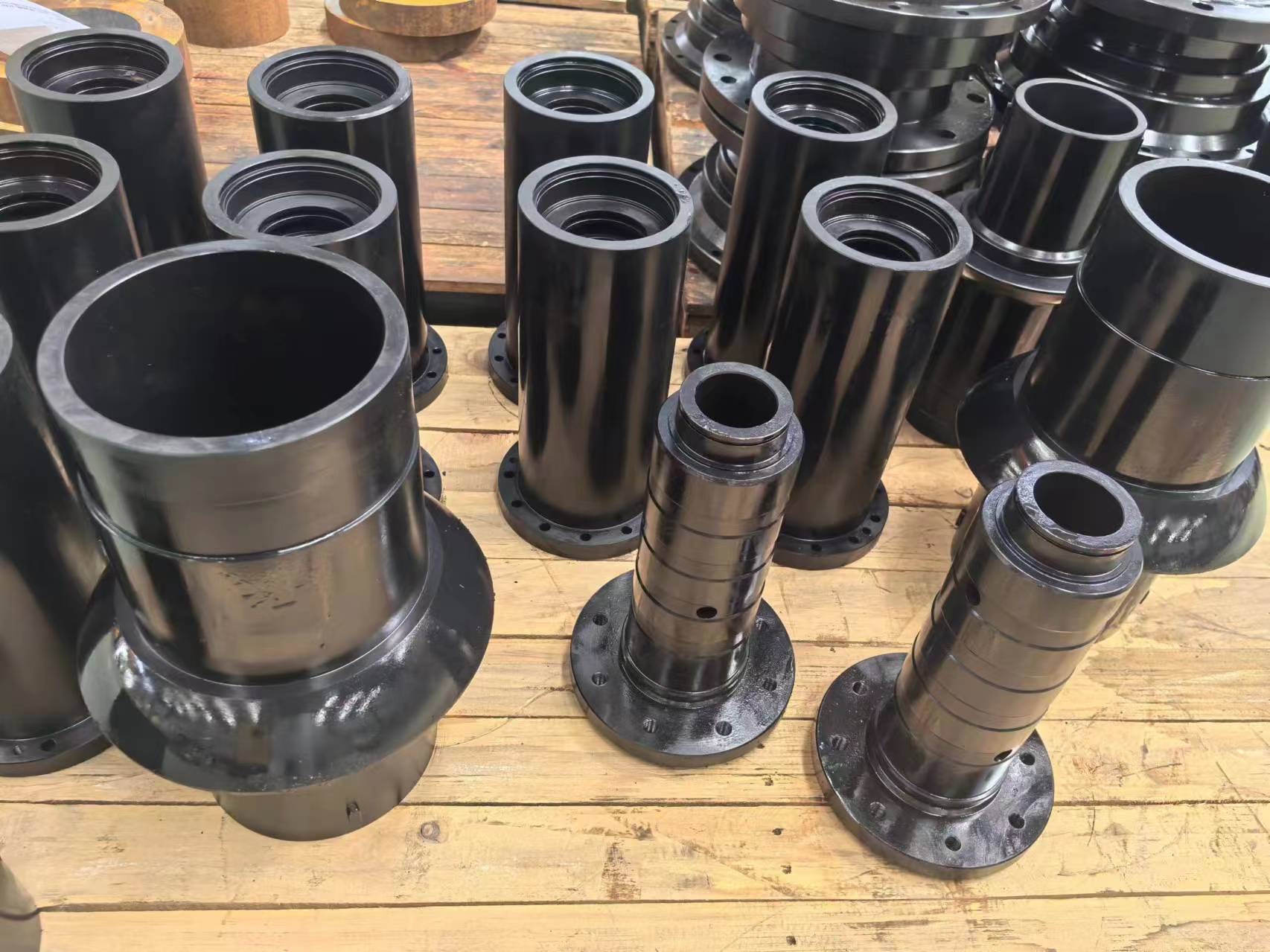
III. Application of QPQ Technology in the Hard Alloy Industry
Currently, QPQ technology is mainly used in the production of wear-resistant parts for the petroleum industry, including valve seals, plungers and choke beans, and pump valve components. When manufacturing these components using a combination of SS410 and hard alloys, we perform QPQ treatment on the steel parts. This technology significantly improves the performance of the steel parts, resulting in a longer overall product lifespan.
OSTON CARBIDE is committed to providing customers with high-quality wear-resistant solutions,if you have any need or questions about wear parts,please feel free to contact us.


